
I Arrived Blind and Left Seeing: An Evening with Mfazwe Ya Mwezi
In a world saturated with fleeting moments, an evening with Mfazwe Ya Mwezi at Dweba Art Café becomes a transformative journey toward self-discovery. Through music that resonates deeply, one is reminded of art's enduring power to heal and connect.
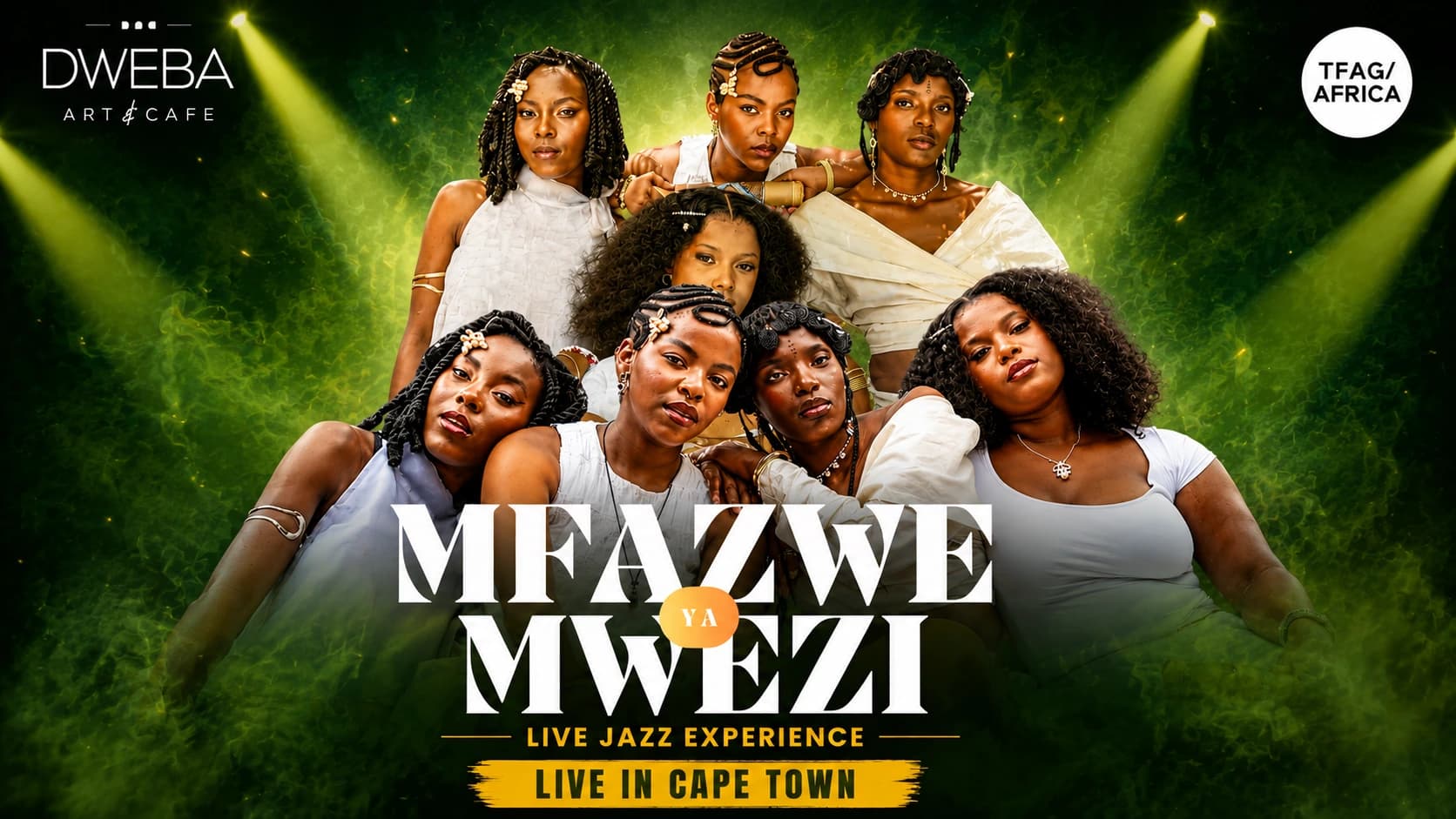
I arrived at Dweba Art Café carrying more than just my physical self. I dragged along questions, the kind that cling to your heels throughout the week, whispering doubts about purpose, direction, and the tangled web of relationships that weave through our lives. These questions sit quietly in the backdrop of daily existence, waiting for the right moment to emerge from the shadows. Little did I know that by the end of the evening, many of those questions would no longer feel like burdens but simply threads of my human experience.
As the first notes from Mfazwe Ya Mwezi pierced the air, an unmistakable shift occurred within me. This wasn’t mere entertainment; this was an invitation. A call to journey inward. The melodies wrapped around me like a warm blanket, evoking memories that danced in the twilight of my mind. It reminded me of childhood church services—not in a strictly religious sense, but in the pure, unfiltered feeling of surrender. Here, in this moment, something larger than myself stirred within the room, and I was not merely an observer but part of a greater tapestry.
I sat, enveloped by the music, as my ears and soul danced in unison. Thoughts and memories surged forward, bringing clarity to questions I had wrestled with all week. Some realizations whispered softly, caressing my spirit, while others crashed into my consciousness like a rolling wave. It was as if the music—crafted with love, skill, and intention—had opened a door within me that I didn’t even know was closed.
This experience reaffirmed a truth I often contemplate through Battora: the profound importance of healing art. In a world that often gauges creativity by metrics like views and streams, we risk overlooking art's oldest purpose—to heal. Long before social media influenced how we share our lives, communities gathered around rhythm, song, dance, and storytelling, finding solace and connection in these acts. Art was not merely a product; it was medicine, memory, and an unbreakable bond.
Mfazwe Ya Mwezi encapsulated that essence so beautifully. What astonished me were the differences in performance traditions. Here, there was no strict barrier between performer and audience. The musician wasn’t a distant figure on stage, but a guide, leading us on a shared journey. Each member of the audience wasn’t a passive spectator but an integral participant, weaving their energy into the fabric of the performance. It was a collective experience, a manifestation of Ubuntu expressed through sound. In that space, strangers transformed into a community, each carrying their unique burdens yet emerging lighter, united by a thread of shared humanity.
As the evening drew to a close, I left Dweba Art Café with a clarity that seemed almost crystalline. It wasn’t because someone had handed me all the answers; it was the music that had laid the groundwork for me to discover them on my own. Perhaps this is the true magic of healing art. It doesn’t dictate; it encourages you to listen to your own voice once more.
If there’s one thing I urge you to do, it’s this: the next time you contemplate spending your hard-earned money on something that will fade from memory in a heartbeat, consider investing in an experience that may linger in your soul for years to come. Buy that ticket. Attend that show. Immerse yourself in the music. You may just find, as I did, that healing often comes disguised as a jazz performance.
To learn more about Mfazwe Ya Mwezi, follow them on Instagram at Mfazwe Ya Mwezi.